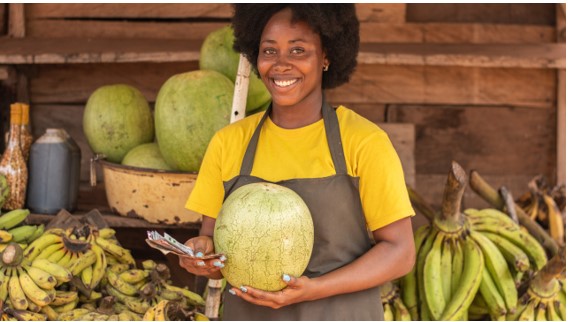
Informality continues to be a striking feature of developing economies, especially in contexts where a large part of the working population depends on activities outside the regulated system to ensure their livelihood. It is a complex phenomenon that poses challenges for governments, citizens and the productive sector.
But after all, where are we in the process of transition to the formal economy? What has already been achieved and what still needs to be done to transform informality into a gateway to inclusion, social protection and sustainable development?
Informality: between survival and institutional exclusion
The informal sector, far from being a marginal or illegal space, is often the only viable alternative for millions of workers and entrepreneurs. It generates income, creates jobs and drives local economies, often filling gaps where the State and the formal sector are still unable to fully operate.
However, informality also represents a lack of labor protection, low productivity, lack of social security coverage and limited access to credit, technology and institutional markets. Furthermore, it reduces the State\'s ability to collect taxes and weakens the sustainability of public policies.
Recent progress: recognizing the informal economy as part of the solution
In recent years, several countries have taken important steps in recognizing the strategic role of the informal economy, not only as a challenge to be tackled, but as a starting point for productive inclusion and sustainable growth.
Some of the measures adopted include:
• Simplified registration and formalization programs;
• Reforms in social contribution systems for self-employed workers;
• Banking and financial education initiatives;
• Policies to encourage micro and small-scale production.
These actions show that gradual integration into the formal economy is possible, as long as there is political will, institutional clarity and active social listening.
Challenges still present in the transition
Despite the initiatives, many obstacles continue to limit the success of the transition, such as:
• Still high formalization costs for those living with unstable incomes;
• Lack of real incentives, such as easy access to credit, public markets or social services;
• Bureaucracy and complexity in the legal registration and contribution processes;
• Distrust in public institutions and the perception that formalization brings more obligations than benefits;
• Low digital and financial literacy.
Overcoming these obstacles requires more than ad hoc solutions. It requires a paradigm shift, based on social dialogue, institutional innovation and public policies designed based on evidence.
Formalization as a process, not an imposition
The transition to the formal economy should not be understood as a legal imposition, but as a gradual construction of bridges between the informal and the institutional.
To this end, it is essential to:
• Create a more user-friendly regulatory environment adapted to local realities;
• Strengthen technical support, training and market access services;
• Invest in trust and active listening with informal workers and entrepreneurs;
• Ensure that formalization results in concrete improvements in quality of life and real opportunities for economic growth.
CPR Consulting’s role in building inclusive solutions
At CPR Consulting, we recognize that informality is not only an economic challenge, but also a reflection of historical exclusions, structural inequalities and institutional limitations.
That is why we support governments, international organizations and civil society in designing transition strategies based on data, participation and realism. Our services include in-depth diagnostics, formulation of inclusive policies, impact assessment and development of institutional capacities.
Conclusion: a transition agenda that respects and includes
We are at a turning point. The formal economy cannot be the privilege of a few; it must be a horizon that is possible for everyone. And to achieve this, it is essential to treat informality with seriousness, respect and strategy.
The transition requires intelligent public policies, open dialogue with the actors of the popular economy and the recognition that productive inclusion is the true driver of sustainable development.
